

Water Filter vs Water Purifier: What’s the Difference and Which Do You Need?
Two products can sound almost identical while doing very different jobs. For example, the terms water filter and water purifier are often used interchangeably, but they actually don’t mean the same thing. And this can cause some confusion for consumers trying to make the best possible choice for their home, office or caravan to have access to clean, fresh drinking water.
At Water Filters Australia, we’ve been supplying durable, fully certified filtration systems since 1999. There are a range of water treatment technologies available, and the right fit for your needs depends on your water source, your concerns and the intended application. Each has its place, but they’re designed to solve different problems.
Water filters and water purifiers are not the same thing
The terms “water filter” and “water purifier” are often used throughout the industry, but products carrying these labels can use very different treatment technologies and achieve very different outcomes. To understand the difference, it helps to know what each term refers to.
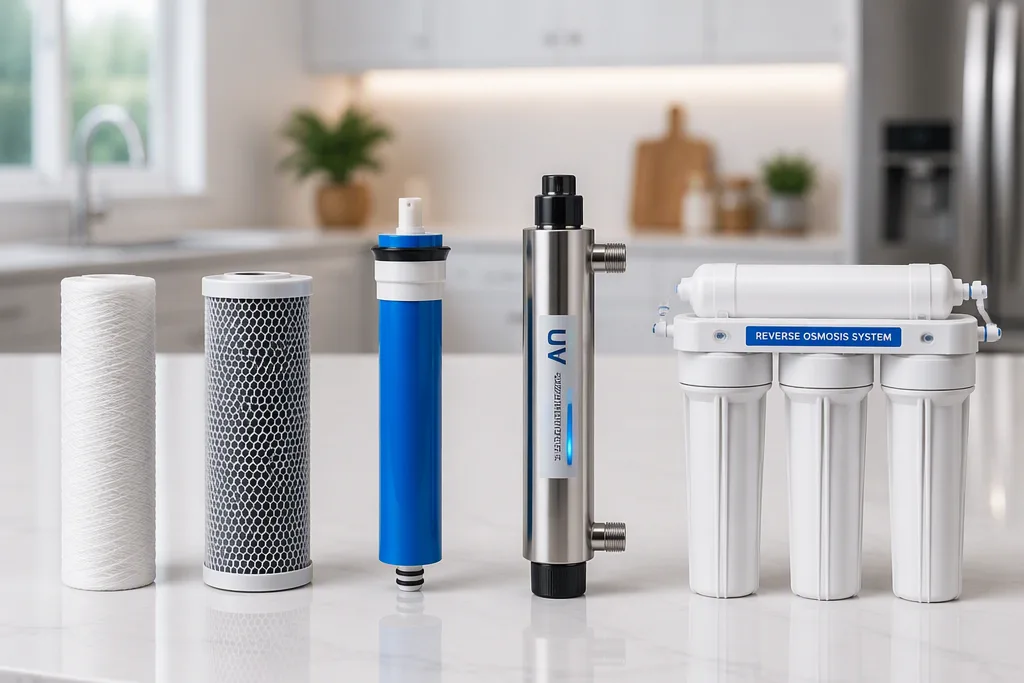
A water filter is designed to improve water quality by passing it through one or more filtration media. Exactly what it targets depends on the technology involved, as not all systems perform the same functions. Activated carbon filters commonly treat chlorine, unpleasant tastes and odours and can also limit volatile organic compounds (VOCs), while sediment filters capture larger physical particles such as sand, rust, dirt and silt. Some advanced systems are also independently certified for contaminants, including PFAS, lead and cysts.
A water purifier is generally intended to produce microbiologically safer drinking water by targeting disease-causing organisms. The technologies involved may include ultraviolet (UV) disinfection, reverse osmosis (RO), ultrafiltration or a combination of treatment methods. UV systems work by damaging the DNA or RNA of bacteria, viruses and protozoa so they can no longer reproduce. They do not treat sediment, chlorine, dissolved minerals or taste. Reverse osmosis takes a different approach by forcing water through a semi-permeable membrane capable of removing a broad range of dissolved contaminants, including salts, metals, chemicals and microorganisms.
So, when is a purification system the better option? Generally, when the water source itself cannot be assumed to be microbiologically safe. This includes untreated rainwater, bore water and some remote water supplies rather than treated municipal drinking water.
Why the water source matters
Not all drinking water starts in the same condition, and the treatment required largely depends on where the water comes from before it reaches the tap. In Australia, water supplied by municipal utilities has already undergone multiple treatment processes before distribution. These include filtration and disinfection to meet the Australian Drinking Water Guidelines (ADWG). Water can, however, differ between locations due to the source, infrastructure and local treatment processes, which is why some people notice differences in taste, odour and mineral content when they move house or travel.
Because municipal drinking water has already passed through these extensive treatment processes, purification is generally not the main concern for Australian households. It becomes far more relevant when water hasn’t received the same level of treatment. As we’ve already mentioned, this is normally true for untreated rainwater, bore water and certain remote water supplies.
The differences between these water sources help explain why treatment requirements can vary so significantly. For example:
- Rainwater: Quality depends on the condition of the roof, gutters and storage tank. It may become contaminated by bird droppings, animal faeces, insects, dust and organic debris if not properly maintained.
- Bore water: Quality varies considerably depending on local geology and may contain elevated minerals, dissolved salts, metals or naturally occurring contaminants. Microbiological quality can also vary.
- Remote water supplies: Water quality depends on the source and local treatment infrastructure and can differ from that of metropolitan treated supplies.
Understanding certifications and performance claims
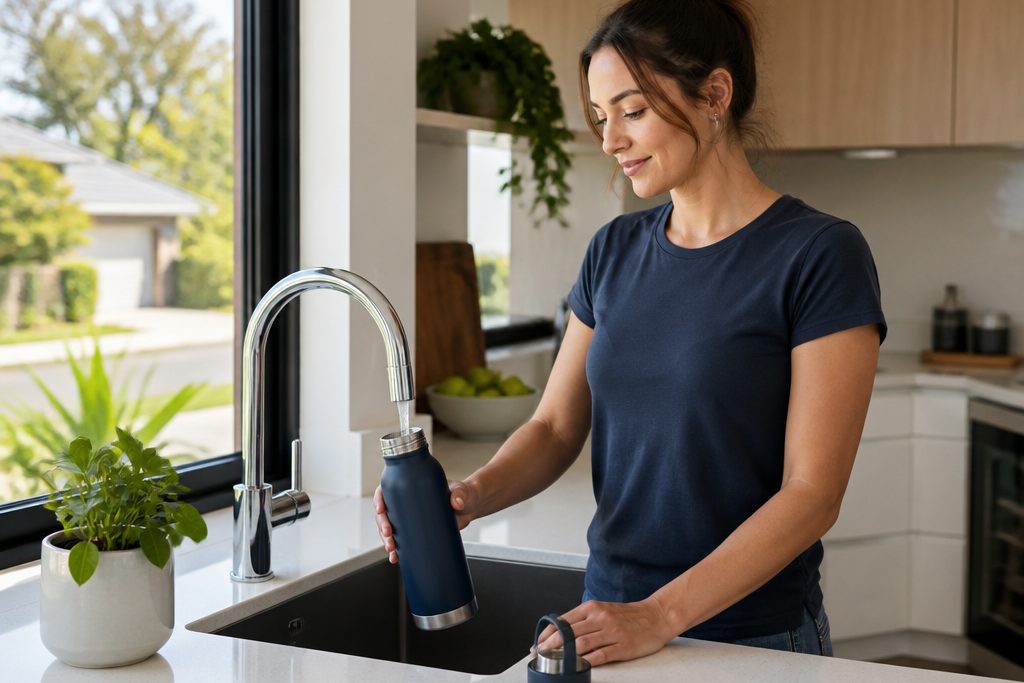
We’re fortunate in Australia to have access to safe drinking water straight from the tap. Before it reaches our homes, it passes through treatment processes that typically include coagulation, flocculation, sedimentation, filtration and disinfection, although the exact process varies between water authorities and source water. So, if the water has already been treated, why do so many Australian households still choose filtration?
Despite these treatment processes, some characteristics of municipal water remain. Chlorine, for example, is intentionally retained to help protect the water as it travels through the distribution network to your home. Depending on the location, water may also contain sediment from ageing plumbing or naturally occurring dissolved substances that can influence taste and odour.
Home filtration treats water at the point where it’s actually consumed. By the time drinking water reaches your kitchen tap, it has travelled through kilometres of distribution pipes and your home’s own plumbing. A quality system provides a final stage of treatment immediately before the water is used for drinking, cooking and other everyday purposes.
Common misconceptions about water filters and water purifiers
By now, it’s probably clear there are plenty of misconceptions surrounding water treatment. Here are a few to keep in mind if you’re trying to figure out what’s what:
- All water filters do the same job. Not necessarily. Different systems target different water quality concerns and may be certified to address completely different contaminants.
- More expensive always means better. Realistically, the best system is the one that’s appropriate for your water source and what you want to improve.
- Once water leaves the treatment plant, it never changes. Water can travel long distances through the distribution network before reaching your tap, which is one reason many households choose point-of-use filtration.
- Every home has identical water quality. Water characteristics can vary depending on the source, local treatment processes and even the plumbing delivering it to your home.
Clearing things up
Now that you understand the difference, it’s much easier to look beyond the terminology and focus on what your water actually needs.
Water Filters Australia supplies premium inline water filters online from our Australian distribution centre. Manufactured in the United States to strict standards, all systems are WaterMark certified, and we offer a full range of certified replacement cartridges.
If you’re ready to enjoy cleaner, better-tasting drinking water at home, shop online today or contact our team for personalised advice on the best system for your home or caravan.
Buy Water Filter Systems
& Water Filters Online

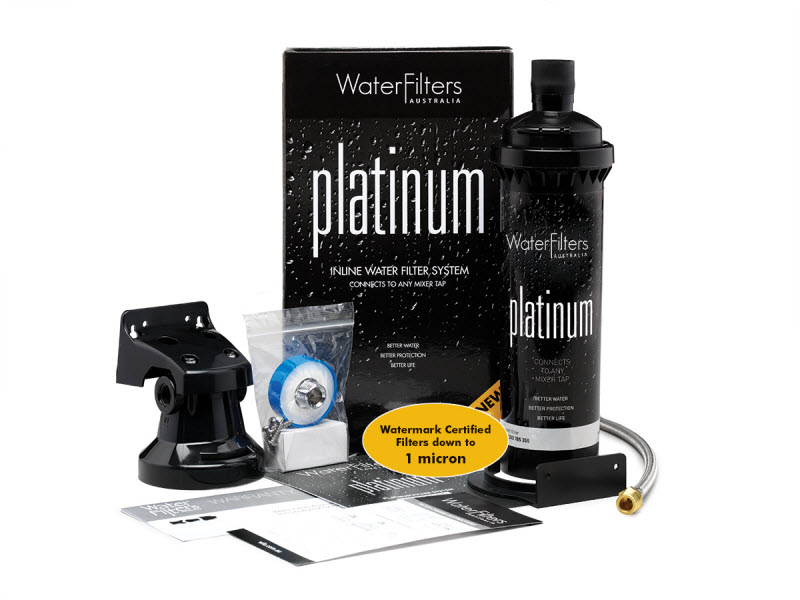
Inline Water Filter System
$346.84 - No separate tap or drilling needed
- Connects inline to cold-water hose
- No plumber needed
- 4x faster than traditional systems
- Lasts a family of 4 for 1 year
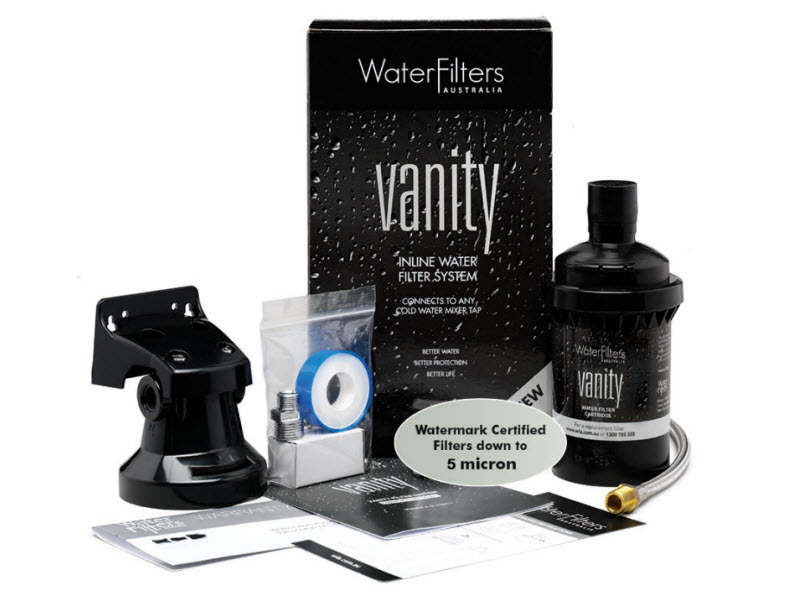
Bathroom Vanity Filter System
$240.90 - Compact for en suite bathrooms
- Space required 335mm x 225mm
- Mounts vertically or horizontally
- Works with your existing tap
- Protects tap from limescale build-up
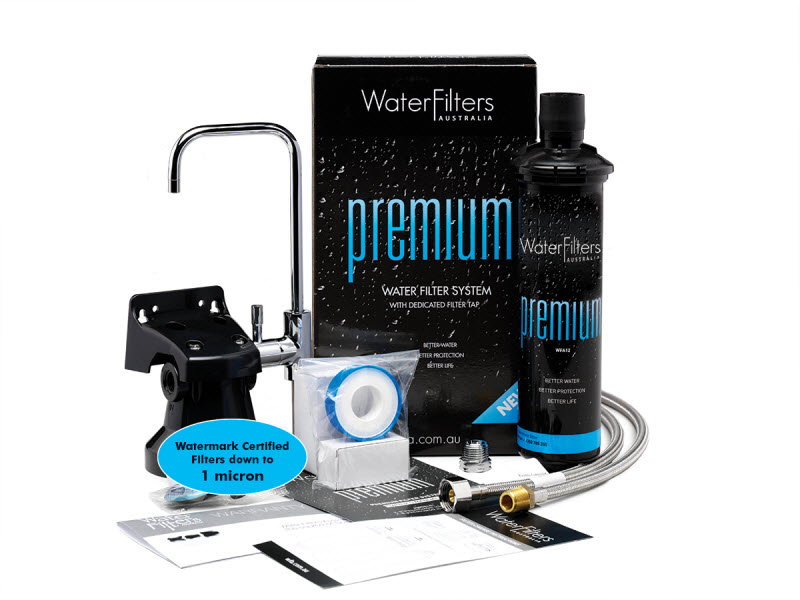
Dedicated Filter Tap System
$394.8 - Ideal if you like a separate filter tap
- Mount filter vertically or horizontally
- Filter lasts 12 months
- Same great taste
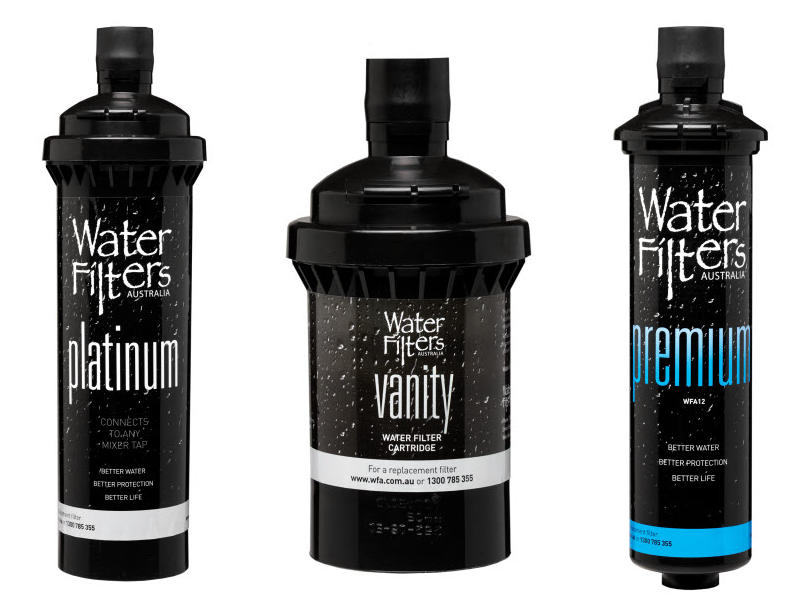
Replacement Filter Cartridges
From $69.76- WFA & Everpure cartridges
- Omnifilter cartridges
- Rainwater cartridges
- Fridge cartridges
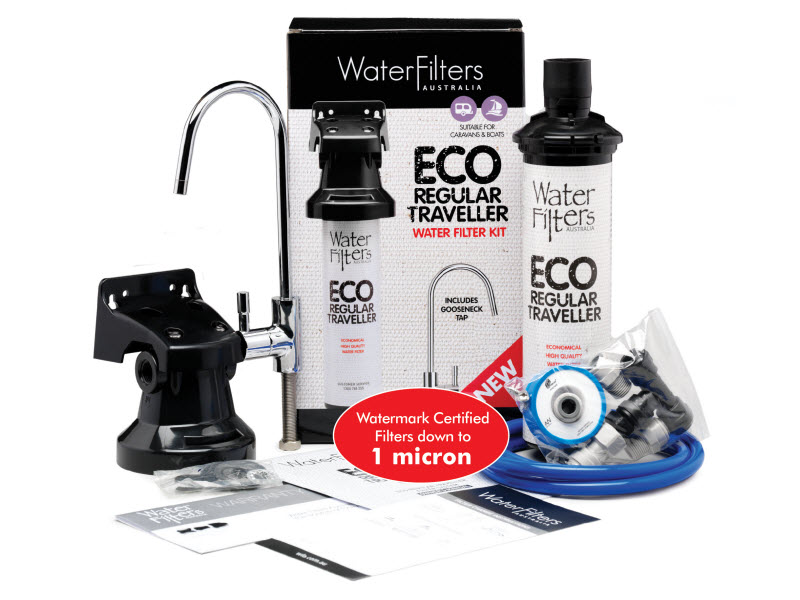
Water Filters for Your RV
From $163.89- Easy installation
- Choice of three systems
- Significantly cheaper than bottled water
- Durable & long lasting
- Space saving
Counter Top System & Filter Taps
From $71- Ideal solution for people on the move
- No plumbing required
- Chrome plated
- Lever operation
- Suitable for WFA Filter Systems
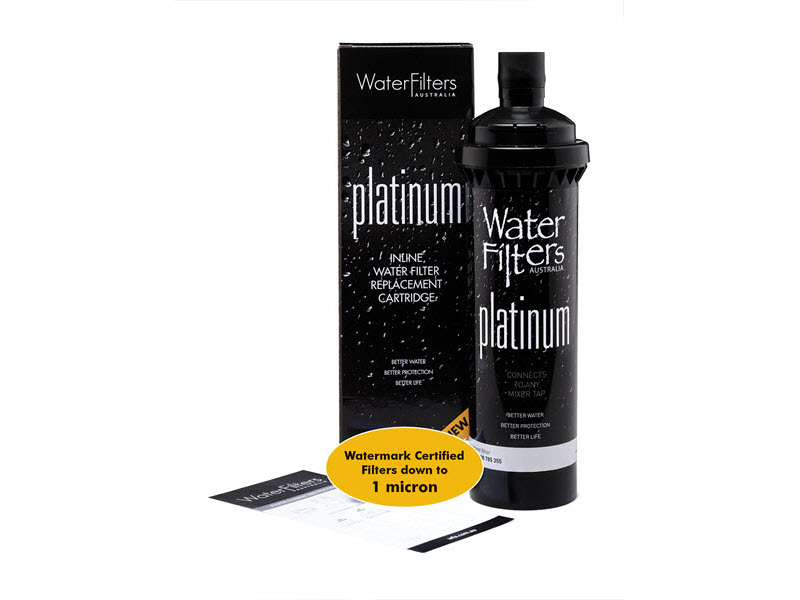
WFA Replacement Cartridges
From $69.76 - Inhibits lime scale build up in water using appliances
- Environmentally friendly
- Removes particles 75 times smaller than the diameter of a hair
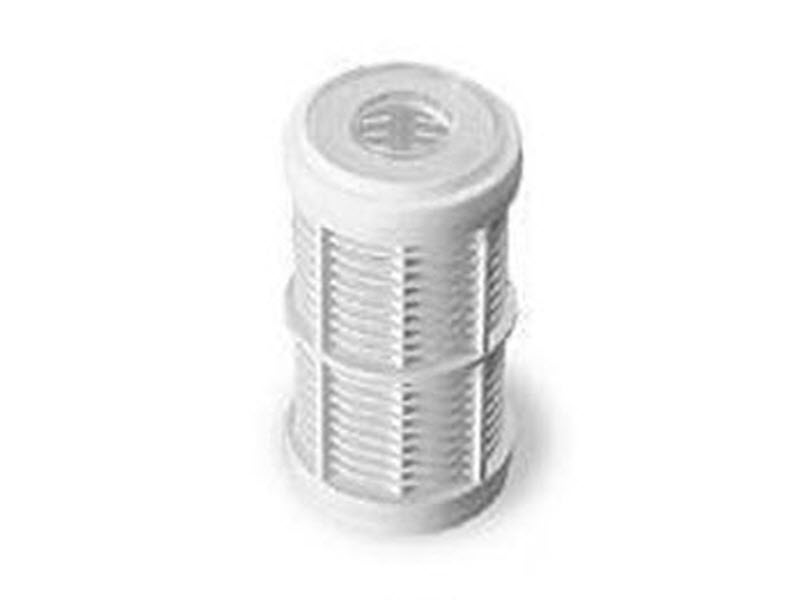
Rain Water Filters
From $37.01 - Ideal screen filter for sediment particles in excess of 80 microns.
- Typically used for filtration before or after a rainwater tank pump
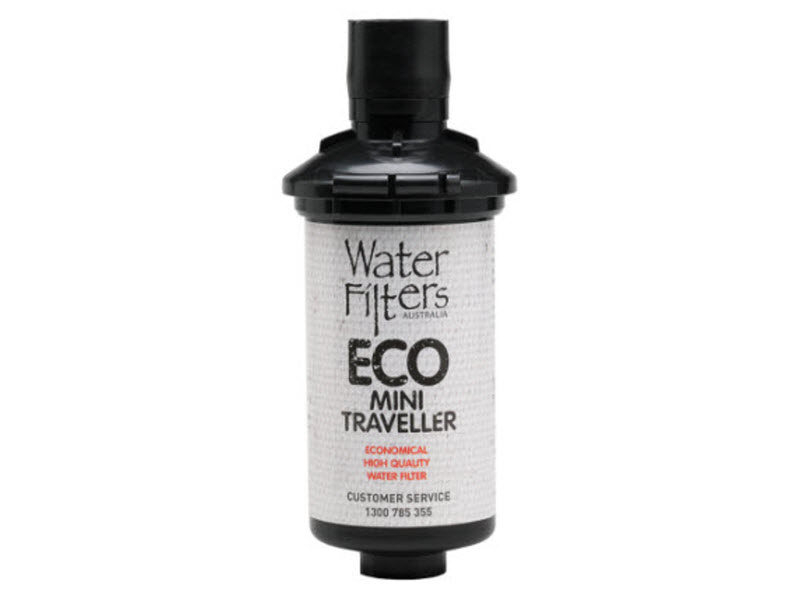
RV & Marine Cartridges
From $69.76- Compact size
- Quick change cartridge – DIY
- Compatible with all Everpure ADC filter installations
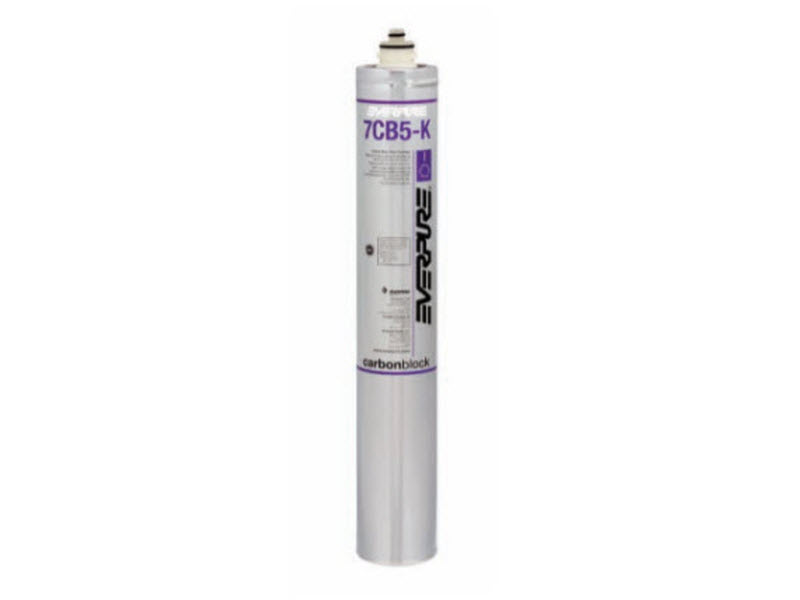
Everpure
From $120.45OUT OF STOCK
- The Everpure 7CB5-K cartridge filters out particles between 1 and 5 microns in size. By way of comparison, the diameter of human hair is 75 microns.
- Contaminants reduced/removed include sediment, chlorine, bad tastes and odours.
- The filtration process also inhibits limescale build up in water using appliances.

Omnifilter
From $36.93- The 1100R is the half micron ‘quick change’ replacement cartridge and is recommended for use with the Omnifilter CBF2 water filter system.
- Removes/reduces the following contaminants and substances; cysts such as giardia and cryptosporidium, chlorine, bad tastes and odours.
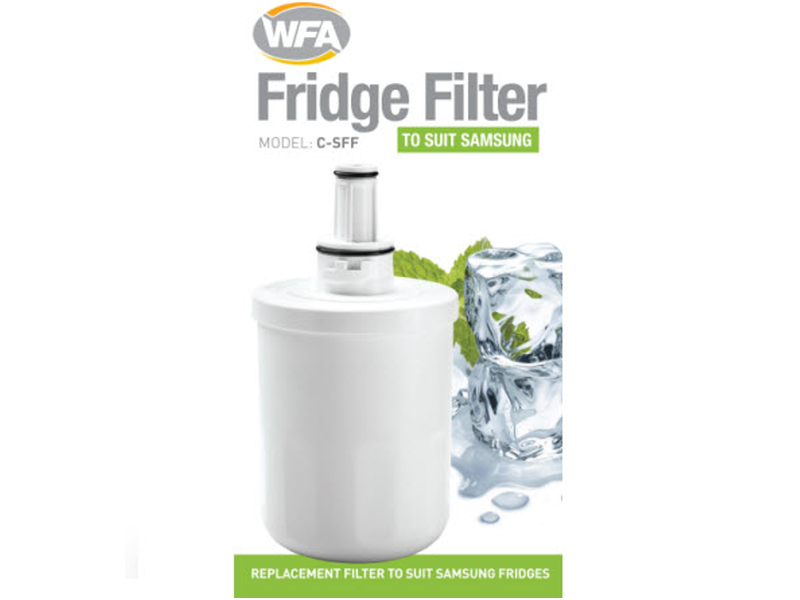
Fridge Filter Cartridges
From $82.48- Contaminants removed include chlorine, bad tastes and odours with some sediment removal/reduction.
- The cartridge inlet and outlet include ¼” ‘push fit’ connection fittings.
- Environmentally friendly, reducing plastic bottle waste.
Specials
From $66.97- A 2 year supply*. Receive a reminder notification to change to your second cartridge.
- Larger quantities purchased receive a larger discount.
News & Articles
Water Filter vs Water Purifier: What’s the Difference and Which Do You Need?
Two products can sound almost identical while doing very different jobs. For example, the terms water filter and water purifier are often used interchangeably, but they actually don’t mean the same thing. And this can cause some confusion for consumers trying to make the best possible choice for their home, office or caravan.
Pets Need Clean Water Too: The Benefits of Filtered Water for Your Furry Friends
The average dog or cat will drink thousands of bowls of water over its lifetime. Pets are family, and many owners will spend hours carefully choosing the best food and bedding for them. But what about hydration? Water is just as essential for animals as it is for humans. And when it’s filtered, it’s cleaner and tastes better.
Can Filtered Water Support Better Focus and Concentration?
Most people have experienced brain fog. Few stop to consider what might be causing it, or they write it off as exhaustion or stress. But it could also be hydration-related. There’s growing scientific evidence linking even mild dehydration with reduced concentration and cognitive function. So, can filtered water support better focus? Yes, it can.